License No. L3155325 | © 2026 TECS. All Rights Reserved.
| Privacy Policy | Legal Disclaimer | Sitemap
Oil & Gas Division

Oil & Gas Division
We focus on delivering specialized products and services to the Oil & Gas Segment in Oman.

Oil & Gas Division


Oil & Gas Division

Oil & Gas Division
Piping Products Division / Induction Bends
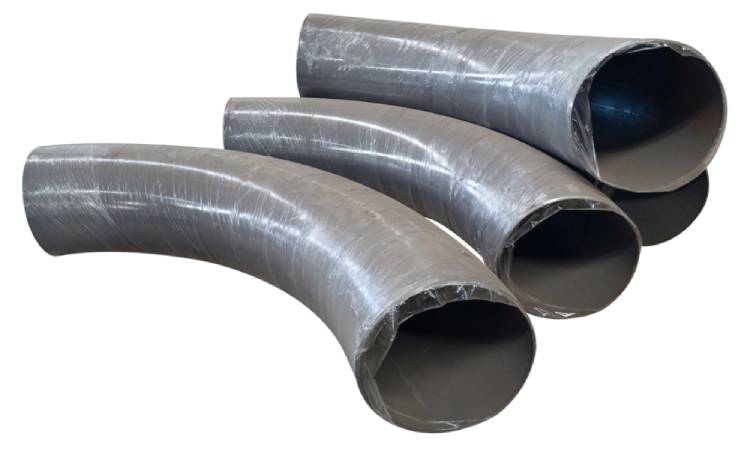
Induction bends are precision-engineered pipe components used in Oil & Gas pipeline systems where smooth directional changes are required without compromising structural integrity. Manufactured using a controlled high-frequency induction heating process, induction bending allows localized heating and forming of the pipe, followed by controlled cooling, producing bends with minimal wall thinning and ovality compared to cold bending methods.
This process enables tighter radii, consistent wall thickness, and mechanical properties that match or exceed those of the parent pipe, making induction bends ideal for high-pressure and critical pipeline applications.
Product Range & Capabilities
- Bending Radii: Typically from 3D to 10D, with custom radii available for special routing and pigging requirements
- Bend Angles: Standard angles of 15°, 30°, 45°, 60° & 90°, with custom angles available
- Sizes: Generally from 2" to 120", with larger sizes available for specialized applications
- Wall Thickness: From standard schedules up to 100 mm and above
- Pressure Ratings: Designed to meet or exceed the rating of the parent pipe, commonly ASME Class 150 to 2500
Materials & Specifications
Induction bends are manufactured from a wide range of materials to suit pipeline service conditions:
- Carbon Steel: API 5L Grades B, X42, X52, X60, X65, X70
- Low-Temperature & Alloy Steel: ASTM A333 Grade 6, ASTM A234 WPB / WPC
- Stainless Steel: ASTM A312 TP304 / 304L, TP316 / 316L, TP321
- Duplex & Super Duplex: UNS S31803, S32205, S32750 / S32760
- Clad Pipes: Carbon steel with internal CRA cladding such as Alloy 625
Quality Control & Testing
All induction bends undergo stringent quality control and testing, including non-destructive examination, mechanical testing, hardness surveys, and hydrostatic testing, ensuring conformity with international standards and long-term performance in demanding pipeline environments.